
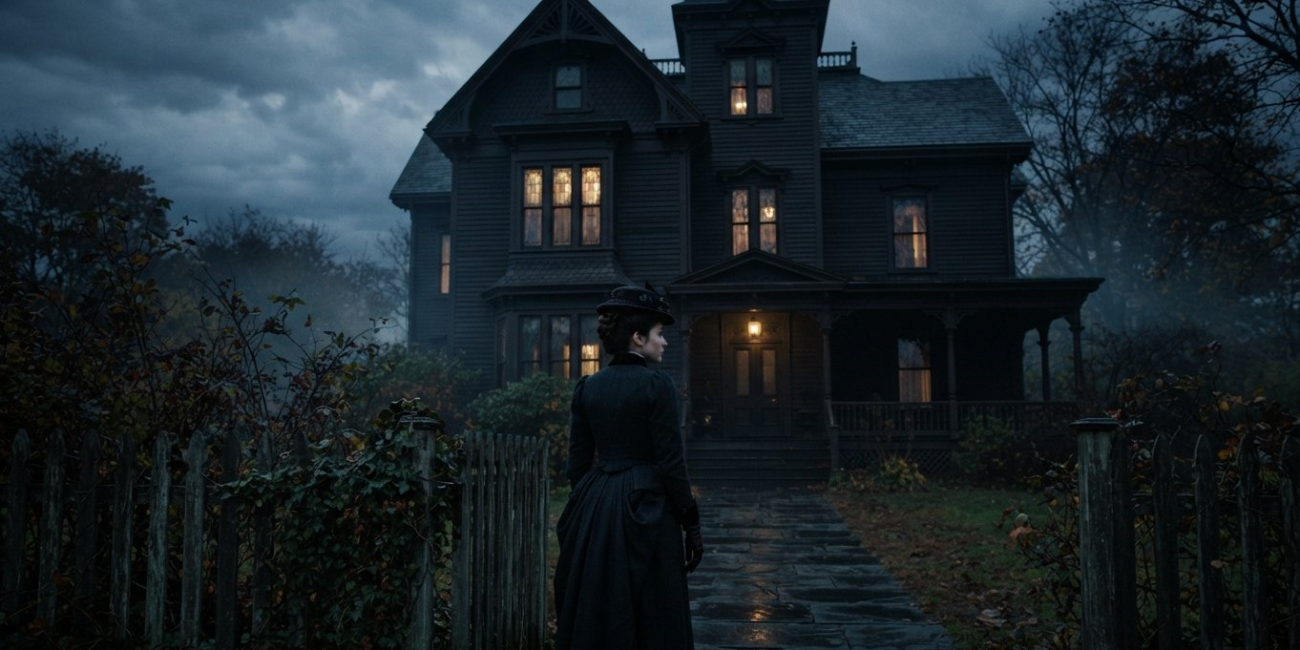
Netflix’s Monster: The Lizzie Borden Story has brought one of America’s most famous murder cases back into the spotlight. The new season of Ryan Murphy and Ian Brennan’s crime anthology has attracted attention for its unusual take on Lizzie Borden’s story, but the early response has been mixed.
The eight-episode series premiered on September 17, 2026, with Ella Beatty playing Lizzie Borden. The cast also features Rebecca Hall, Charlie Hunnam, Vicky Krieps and Billie Lourd.
One of the biggest talking points is the show’s early Rotten Tomatoes score. Critics and viewers have not responded in the same way, raising questions about the series’ storytelling, performances and approach to historical events.
However, the ratings are still developing. With only a small number of reviews available in the early reports, the current figures should be treated as a first impression rather than a final judgment on the series.
What Is Monster: The Lizzie Borden Story About?
The Netflix drama revisits the 1892 murders of Andrew Borden and his second wife, Abby Borden, in Fall River, Massachusetts. Lizzie, Andrew’s daughter, was accused of the killings but was acquitted at trial in 1893.
The case became a lasting part of American true-crime history. Questions about the evidence, the family’s private life and the identity of the killer have kept the story alive for generations.
Instead of following the format of a documentary, the series uses the case as the starting point for a fictionalized drama. It explores the tense atmosphere inside the Borden household and the relationships that shaped Lizzie’s life.
The show also looks at family conflict, personal freedom and the social expectations placed on women during that period. These themes give the creators room to imagine what life may have been like behind closed doors, but they also raise questions about how far a historical drama should go beyond the available evidence.
This season is the fourth entry in the Monster anthology, following earlier stories focused on Jeffrey Dahmer, Lyle and Erik Menendez, and Ed Gein. Its focus on a woman who was accused of murder but found not guilty gives the series a different angle from its predecessors.
Monster: The Lizzie Borden Story Rotten Tomatoes Scores
The early Rotten Tomatoes figures have drawn attention because they show a noticeable difference between the critical response and audience ratings.
A Forbes report published on September 18 cited a 50% Tomatometer score based on six critic reviews and a 26% audience score based on more than 50 verified ratings. A later snapshot described in the supplied reporting showed a 32% critics’ score based on two listed reviews, while the audience section had fewer than 50 ratings displayed.
These figures do not provide a stable picture of the season’s reception. Rotten Tomatoes scores can change as reviews are added, ratings are updated and more viewers watch the series.
The number of reviews behind a percentage matters, too. A score based on only a handful of critics may shift sharply when another review appears. The same is true of audience ratings when relatively few people have submitted them.
For that reason, it is too early to say that the show has received a final verdict from either critics or viewers.
The mixed response does, however, point to a wider disagreement about the series. Some viewers may welcome its bold interpretation of a familiar case, while others may prefer a more careful retelling that stays closer to documented history.
Anyone checking the Monster: The Lizzie Borden Story Rotten Tomatoes score should look at the number of reviews and ratings alongside the percentage. Those details offer useful context and help avoid drawing firm conclusions from an early snapshot.
Critics Debate the Storytelling and Ella Beatty’s Performance
Early reviews have shown different opinions about the series’ style and its handling of Lizzie Borden. Some critics have praised the performances and visual presentation, while others have questioned whether the drama offers enough insight into the historical figure at its center.
The Guardian’s Lucy Mangan praised elements of the show’s style and acting but criticized its lack of deeper understanding of Borden. Other reviewers were more positive about the series’ approach.
Variety’s Aramide Tinubu offered a favorable response, while Decider’s Joel Keller also highlighted positive aspects of the opening episode and its performances. These differing opinions help explain why the show has become a talking point among fans of the Monster franchise.
Ella Beatty’s portrayal of Lizzie is central to the drama. Her character is shown as a woman living in an unhappy household, surrounded by family tensions and strict social expectations.
Rebecca Hall plays Abby Borden, while Charlie Hunnam portrays Andrew Borden. Billie Lourd appears as Lizzie’s sister Emma, and Vicky Krieps plays Bridget Sullivan, the family’s maid.
The cast gives the story several relationships to explore, although not every dramatic choice will appeal to viewers. For some, the performances may be enough to keep watching. Others may feel that the writing and historical changes distract from the actors’ work.
The series also takes a different approach to the relationship between Lizzie and Bridget. Their romantic and conspiratorial connection is part of the show’s dramatic interpretation, but it has not been established as a historical fact.
That distinction matters for anyone watching the series to learn about the real case. The show can offer an engaging fictional story, but its scenes should not be treated as proof of what happened in the Borden home.
How Accurate Is the Netflix Series, and Is It Worth Watching?
The real Lizzie Borden case remains unresolved in the sense that no one else was convicted of the murders after her acquittal. The trial did not establish her guilt beyond a reasonable doubt, and her acquittal remains an important part of the historical record.
Netflix’s version adds imagined relationships and dramatic connections to other notorious women, including Aileen Wuornos and Elizabeth Báthory. These elements serve the series’ themes, but they should not be confused with proven links between the real people.
The show’s creative freedom is likely to be one of its most debated features. Historical dramas often fill gaps in the record with imagined conversations and events. The challenge is making those inventions clear enough that viewers can separate entertainment from documented history.
The Lizzie Borden case has remained popular because it combines a wealthy family, a shocking double murder, a public trial and unanswered questions. The fact that Lizzie was acquitted has also helped keep the mystery alive.
For viewers who enjoy stylized crime dramas, Monster: The Lizzie Borden Story may be worth trying, particularly for its cast and unconventional storytelling. Those who prefer a fact-focused account may want to read reliable historical sources alongside the show.
The early Rotten Tomatoes response suggests that the series has not won over everyone. Still, a small number of reviews cannot tell the whole story, and the ratings may change as more people watch.
Frequently Asked Questions
1. When did Monster: The Lizzie Borden Story premiere?
The eight-episode Netflix series premiered on September 17, 2026.
2. What is the early Rotten Tomatoes score for Monster: The Lizzie Borden Story?
The score has changed between early reports. One report cited a 50% critics’ score, while a later snapshot showed 32%. These figures were based on small numbers of reviews, so check Rotten Tomatoes for the latest ratings.
3. Is Monster: The Lizzie Borden Story based on a true story?
Yes, the series is inspired by the Lizzie Borden murder case of 1892. However, it includes fictionalized relationships and dramatic events, so it should not be treated as a documentary or a fully accurate account of the case.
Netflix’s Monster: The Lizzie Borden Story has reopened discussion about a case that has fascinated audiences for more than a century. Its performances and dramatic style have received both praise and criticism, while its historical changes have sparked further debate.
For now, the Rotten Tomatoes scores offer only an early look at the response. As more reviews and audience ratings arrive, viewers will have a clearer sense of how the series has been received. Until then, the best approach is to watch it as a fictionalized crime drama and keep the historical record separate from the story created for television.
