
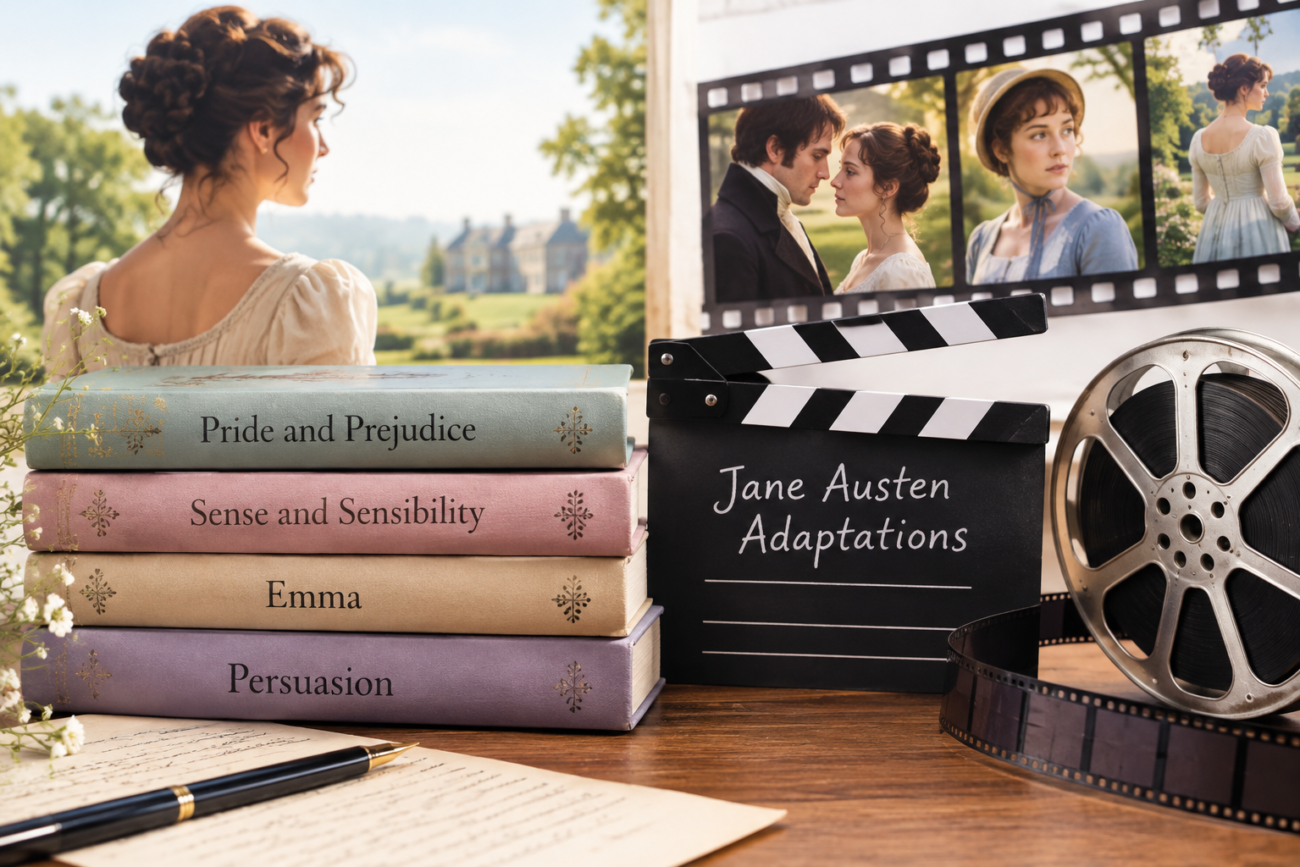
Jane Austen’s novels have inspired generations of readers, filmmakers, and television audiences. From Pride and Prejudice to Emma and Sense and Sensibility, her stories continue to appear on screen in new and interesting forms.
Although the main characters and storylines often remain familiar, each adaptation brings its own style. Some productions stay close to the original books, while others change the dialogue, costumes, relationships, or tone to suit modern viewers.
These differences can make the same story feel completely new. A romantic scene that feels subtle in a novel may become the main focus of a film, while a character’s quiet humour may be expressed through facial expressions or changes in dialogue.
But Austen’s stories are about much more than romance and beautiful period costumes. Her books explore family relationships, financial pressure, social class, reputation, and the choices available to women in her time.
When these stories move from the page to the screen, some of those details can receive less attention. Here are four ways film and television adaptations can differ from Austen’s original novels.
1. Film Adaptations Often Put More Focus on Romance
Romance is one of the best-known features of Jane Austen’s writing. Readers remember Elizabeth Bennet and Mr Darcy, Emma Woodhouse and George Knightley, and Elinor Dashwood and Edward Ferrars for their complicated relationships and memorable moments.
However, Austen’s novels do not focus on love alone. Her characters also face family expectations, financial problems, social rules, and the consequences of their own decisions.
Marriage was especially important in the society Austen described. For many women, it could affect their financial security, social position, and future opportunities.
These concerns give the romantic relationships a deeper meaning. A suitable marriage could offer stability, while a poor decision could create serious difficulties.
Films have limited time to tell a story, so screenwriters often give the central romance more attention. A meaningful glance, a dramatic meeting, or a long-awaited declaration of love can quickly connect with an audience.
That approach can make a film entertaining, but it may leave less room for the social pressures surrounding the characters.
Reading the original novel can reveal another side of the story. What appears to be a simple love story on screen may also be a careful examination of money, independence, and the expectations placed on women.
2. Costumes and Hairstyles Do Not Always Match the Period
Beautiful gowns, elegant estates, bonnets, and carefully styled hair are a familiar part of Jane Austen adaptations. These details help create the atmosphere of Regency-era England, but historical accuracy can vary from one production to another.
Costume designers must make choices about how characters should look. Some aim for a close representation of the period, while others use a more modern style to make the characters feel familiar to today’s viewers.
Hairstyles can be especially noticeable. Loose hair is often used in romantic or emotional scenes because it creates a softer, more relaxed appearance. However, hairstyles and dress conventions in Austen’s time were influenced by age, social position, occasion, and fashion.
Clothing also helps tell the audience something about a character. The quality of a dress, the use of jewellery, and the choice of accessories may suggest wealth, family background, or the importance of a social event.
A character from a wealthy family might have access to clothing that another character could not easily afford. Such differences can help viewers understand the social world in which the story takes place.
Still, filmmakers are not always trying to create a perfect historical record. They may choose costumes that look attractive on camera or help a character connect with a modern audience.
This is why two adaptations of the same novel can look very different. One may focus on historical detail, while another may favour a fresh visual style.
3. Austen’s Humour and Social Commentary Can Be Hard to Show
One of Jane Austen’s greatest strengths is her sharp, understated humour. She could reveal a character’s weaknesses through a short conversation, an ironic comment, or a narrator’s carefully chosen words.
This style often encourages readers to look beyond what a character says. Someone may believe they are being sensible or impressive, while the reader can see the pride, confusion, or self-interest behind their behaviour.
A film has to communicate these ideas in a different way. Actors can use expressions, pauses, gestures, and changes in tone, but not every detail of the original narration can fit naturally into a scene.
Long conversations may also be shortened to keep the story moving. Secondary characters or smaller storylines may be removed, especially when they do not directly affect the main plot.
These decisions can make an adaptation easier to follow, but they can also change how the audience understands the characters.
Austen’s social observations can face a similar problem. In Pride and Prejudice, the relationship between Elizabeth Bennet and Mr Darcy is important, but the novel also explores inheritance, class, family reputation, and the limited choices available to women.
In Sense and Sensibility, the Dashwood sisters must deal with romantic disappointment as well as the financial problems caused by their family circumstances.
When an adaptation gives most of its attention to romantic scenes, these wider themes may become less obvious. The result can feel more like a traditional period romance than the layered social story found in the book.
That does not automatically make the film unsuccessful. It simply means the screen version may offer a different experience from reading Austen’s original work.
4. Every Adaptation Offers a Different View of Austen’s Characters
One reason filmmakers continue to return to Jane Austen is that her characters can be understood in different ways. They have strengths, weaknesses, and personal struggles that leave room for fresh interpretations.
Elizabeth Bennet is intelligent and independent, but she can also misjudge people. Emma Woodhouse is confident and generous in some situations, yet her assumptions can cause problems for others.
Marianne Dashwood is guided strongly by emotion, while her sister Elinor often tries to remain practical. Neither sister is simply one thing, and their differences help make their relationship interesting.
Actors and directors may highlight different sides of these personalities. One version may focus on a character’s humour, while another may pay more attention to family responsibilities or emotional growth.
This is also why there is no single rule for a successful adaptation. Some viewers prefer films that follow the books closely, while others enjoy creative changes that make the stories feel fresh.
A good adaptation does not have to repeat every line of dialogue. It should, however, understand the characters and the ideas that make the original story meaningful.
Ang Lee’s 1995 film Sense and Sensibility, starring Emma Thompson, Kate Winslet, Hugh Grant, and Alan Rickman, is one well-known example of Austen’s work reaching a wide film audience. Its continued place in discussions of Austen adaptations shows how a familiar novel can find new viewers through cinema.
Watching different versions can be rewarding because each production makes its own choices. Comparing those choices with the original book helps viewers notice details they might otherwise miss.
Frequently Asked Questions
1. Why do Jane Austen films differ from the original novels?
Films have limited running times and rely on visual storytelling. Screenwriters may shorten conversations, remove smaller storylines, or give more attention to romance to make the story work on screen.
2. Are Jane Austen adaptations historically accurate?
Some productions aim for detailed historical accuracy, while others take creative liberties with clothing, hairstyles, dialogue, and character presentation. Accuracy depends on the choices made by each production.
3. Which Jane Austen novel has been adapted into films and television shows?
Several of her novels have received multiple adaptations, including Pride and Prejudice, Emma, Sense and Sensibility, and Persuasion. Each version offers a different interpretation of the characters and story.
Why Austen’s Stories Still Connect With Audiences
Jane Austen’s novels were written more than two centuries ago, yet their themes remain familiar. Family pressure, misunderstandings, financial concerns, social expectations, and the search for personal happiness still influence people’s lives.
The historical setting may feel distant, but the emotions behind the stories are easy to recognise. That gives filmmakers plenty of ways to introduce Austen to new audiences.
Changes to the romance, costumes, humour, and social themes can make each adaptation feel different. For readers, those differences offer a reason to return to the original novels and discover details that may not have appeared on screen.
There is no single way to bring Austen’s work to life. The most rewarding adaptations are often those that balance the appeal of the romance with the wit, character development, and social observations that make her writing distinctive.
That is why her stories continue to inspire new interpretations, and why audiences still enjoy comparing the books with the films they have inspired.
