
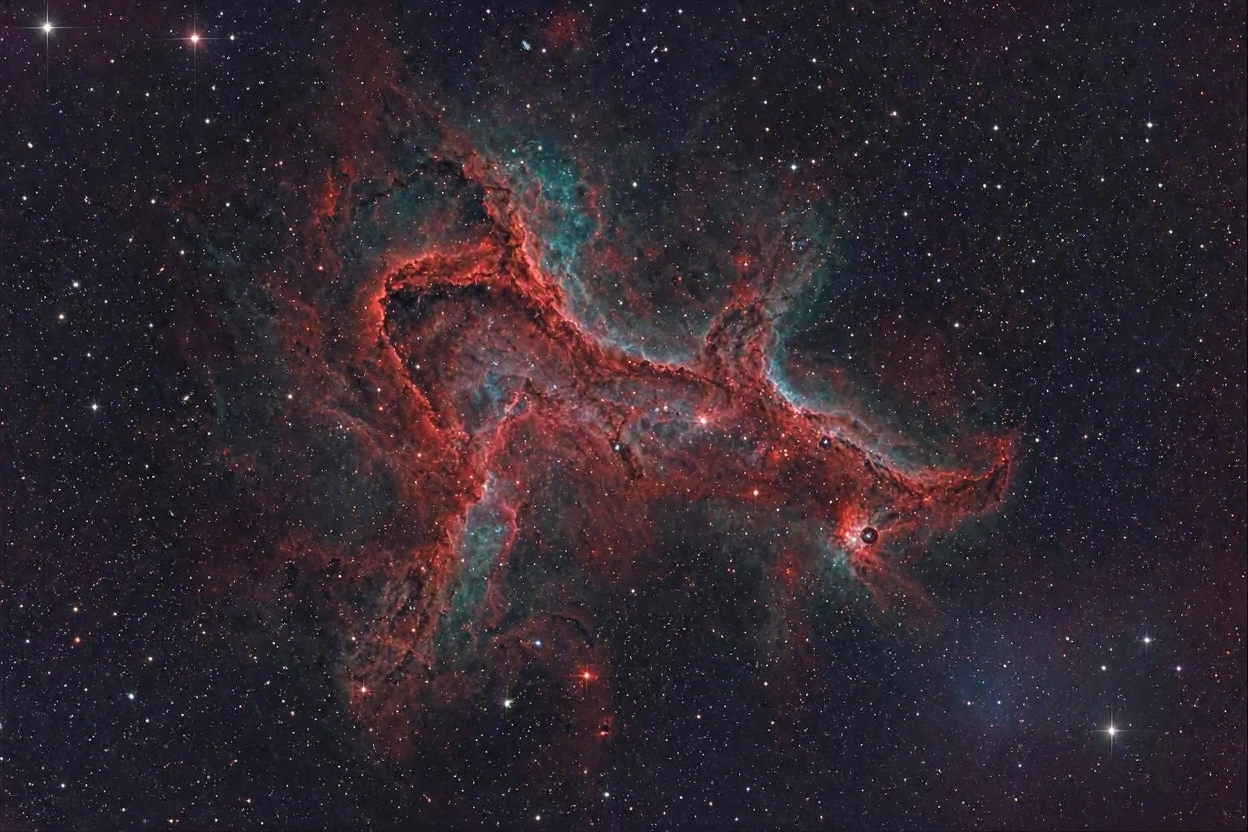
A distant cloud of cosmic dust has captured the attention of astronomy fans around the world. Known as the Shark Nebula, the unusual space object has become the subject of the winning photograph in the 2026 ZWO Astronomy Photographer of the Year competition.
The photograph, titled “The Quiet Predator,” was taken by Kuwaiti astrophotographer Ali Alobaidly. Organized by Royal Observatory Greenwich, the competition named his image the overall winner, recognizing its striking composition and the skill needed to capture such a faint object in deep space.
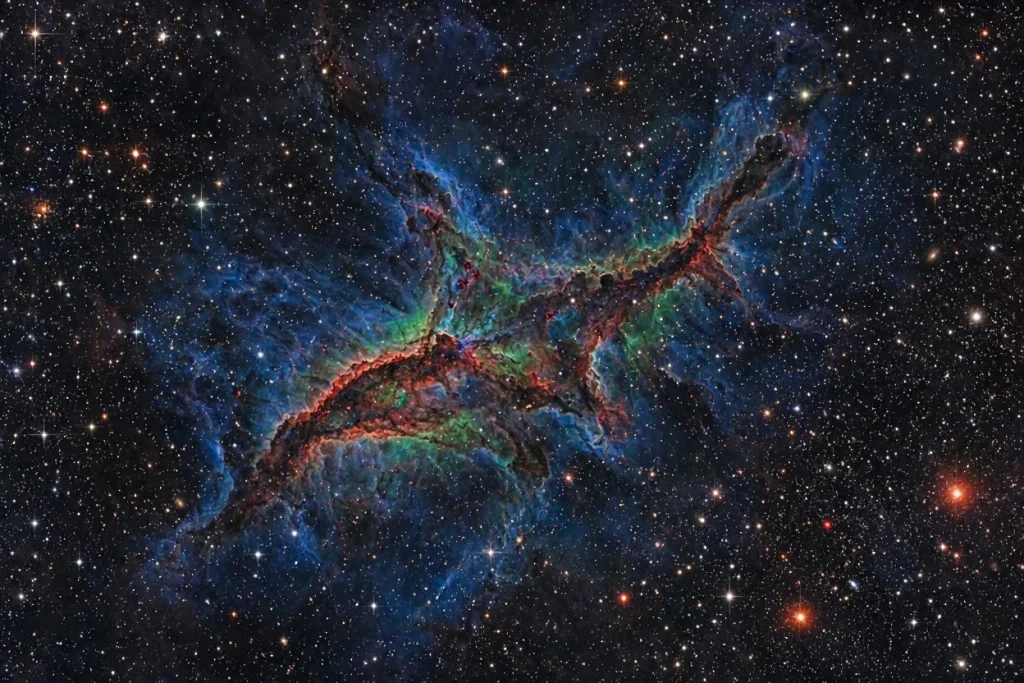
At first glance, the image looks like a giant shark moving through a sea of stars. Its dark outline stands out against the surrounding space, giving the distant nebula a shape that is easy to recognize.
The photograph is not just visually impressive. It also shows how patience, careful planning and modern imaging equipment can reveal objects that are difficult to see with ordinary telescopes.
For Alobaidly, the award marks a major achievement. He has also made history as the first photographer from Kuwait to win the competition’s overall title.
The Shark Nebula Photograph That Won the Top Prize
Alobaidly’s winning image shows the Shark Nebula, also known as LDN 1235. Located around 650 light-years from Earth in the constellation Cepheus, this dark nebula is made up of dense clouds of interstellar dust.
The dust blocks light from stars and other objects behind it. This creates a dark silhouette against the brighter background, giving the nebula its unusual shark-like appearance.
Blue areas around the dark structure add contrast and make the image even more striking. These areas are associated with reflection nebulae, which scatter light from nearby stars rather than producing their own visible light in the same way as emission nebulae.
One of the most impressive details is the time spent collecting the image. According to Royal Museums Greenwich, Alobaidly used more than 28 hours of exposure to bring out the faint details of the nebula.
Long exposure times allow cameras to collect more light from distant objects. Astrophotographers often combine multiple photographs to reveal fine details while reducing unwanted image noise.
The final result gives viewers a clearer look at a part of the universe that would otherwise remain difficult to observe.
Competition judge Steve Marsh praised the image’s detailed stars, delicate nebulosity and sharply defined dark features. These qualities helped the photograph stand out among thousands of entries.
Who Is Ali Alobaidly, and How Was the Image Captured?
Ali Alobaidly is an astrophotographer from Kuwait who captured the winning image in Jahra Governorate. His photograph connects a distant astronomical object with the landscape and skies of his home country.
The location adds a personal element to the image. While the Shark Nebula is hundreds of light-years away, the photograph was created from a specific place on Earth, using equipment and techniques designed to collect faint light from deep space.
Capturing a nebula requires more than pointing a camera toward the sky. Photographers must choose a suitable target, plan their observations and work with clear skies and stable equipment.
They also need to account for the Earth’s rotation. Specialized tracking equipment helps keep a distant object in the camera’s field of view during long exposures.
Once the photographs have been collected, image processing helps bring out details that are difficult to see in individual frames. The process requires a careful balance between revealing faint structures and keeping the image faithful to the data.
The more than 28 hours spent on “The Quiet Predator” show the level of patience involved in this type of photography.
Alobaidly’s achievement is also significant for Kuwait. His overall victory places the country in the competition’s history and brings international attention to its astrophotography community.
Astronomy Photographer of the Year 2026: Winners and Exhibition
The 2026 contest marked the 18th edition of the ZWO Astronomy Photographer of the Year competition. It attracted photographers from around the world, with Royal Museums Greenwich reporting almost 4,000 images from 769 entrants in its shortlist announcement.
The competition covers a wide range of astronomical subjects. Entries include photographs of stars, nebulae, planets, comets, the Moon, the Sun and landscapes featuring the night sky.
Alobaidly won both the Stars and Nebulae category and the overall competition. His photograph was selected from a field that included many different styles of astronomical photography.
The overall winner received a £10,000 prize. The competition also recognizes category winners, runners-up and highly commended photographers, giving talented image-makers a chance to share their work with a wider audience.
Another notable result came from 15-year-old Nikolaos Strimpoulis, who won the young photographer award with his image “Mineral Moon.” Captured in Palaio Faliro, Athens, the photograph highlights subtle colors and details across the Moon’s surface.
His success shows that astronomy photography can cover nearby objects as well as distant clouds of gas and dust.
For those who want to see the photographs in person, Royal Museums Greenwich announced an exhibition at the National Maritime Museum in London, opening on September 18, 2026. The exhibition features selected images from the competition and gives visitors an opportunity to explore the variety of subjects captured by astrophotographers.
The display also helps introduce astronomy to people who may not have access to telescopes or specialist photography equipment.
Why the Shark Nebula Image Stands Out
The success of “The Quiet Predator” comes from several elements working together. The nebula’s natural shape immediately catches the eye, while the surrounding stars and blue reflection nebulae give the image depth.
Its technical quality is another important factor. Dark nebulae can be challenging subjects because they do not shine brightly on their own. Photographers must capture the contrast between the obscuring dust and the light behind it.
The photograph also tells a story about discovery. Most people cannot see the Shark Nebula with the naked eye, yet the image makes this distant object feel familiar and almost alive.
That is one of the strengths of astrophotography. It turns faint points of light and barely visible structures into images that people can understand and enjoy.
Modern digital cameras, telescopes, tracking systems and image-processing tools have helped photographers capture increasingly detailed views of the universe. However, good equipment alone is not enough. Experience, careful planning and time remain essential.
Alobaidly’s achievement brings these elements together in a photograph that is both technically impressive and easy to connect with emotionally.
Frequently Asked Questions
1. What is the Shark Nebula?
The Shark Nebula, also called LDN 1235, is a dark nebula located about 650 light-years from Earth in the constellation Cepheus. Its clouds of dust block light from objects behind them, creating a dark shape that resembles a shark.
2. Who won Astronomy Photographer of the Year 2026?
Kuwaiti astrophotographer Ali Alobaidly won the overall title with his photograph “The Quiet Predator.” The image also won the Stars and Nebulae category.
3. What makes “The Quiet Predator” special?
The photograph combines the Shark Nebula’s distinctive shape with detailed stars and blue reflection nebulae. More than 28 hours of exposure helped reveal its faint structures, earning the image the competition’s top award.
Ali Alobaidly’s winning photograph is a reminder that some of the most remarkable sights in the universe are hidden from ordinary view. Through careful observation and hours of image capture, he transformed a faint cloud of cosmic dust into an image that has attracted international attention.
With its shark-like silhouette, rich detail and connection to Kuwait, “The Quiet Predator” offers a memorable view of deep space. Its success also highlights the creativity and patience behind modern astrophotography.
Sometimes, the universe creates shapes that feel surprisingly familiar. In this case, a distant cloud of dust has become one of the year’s most talked-about astronomy photographs.
