
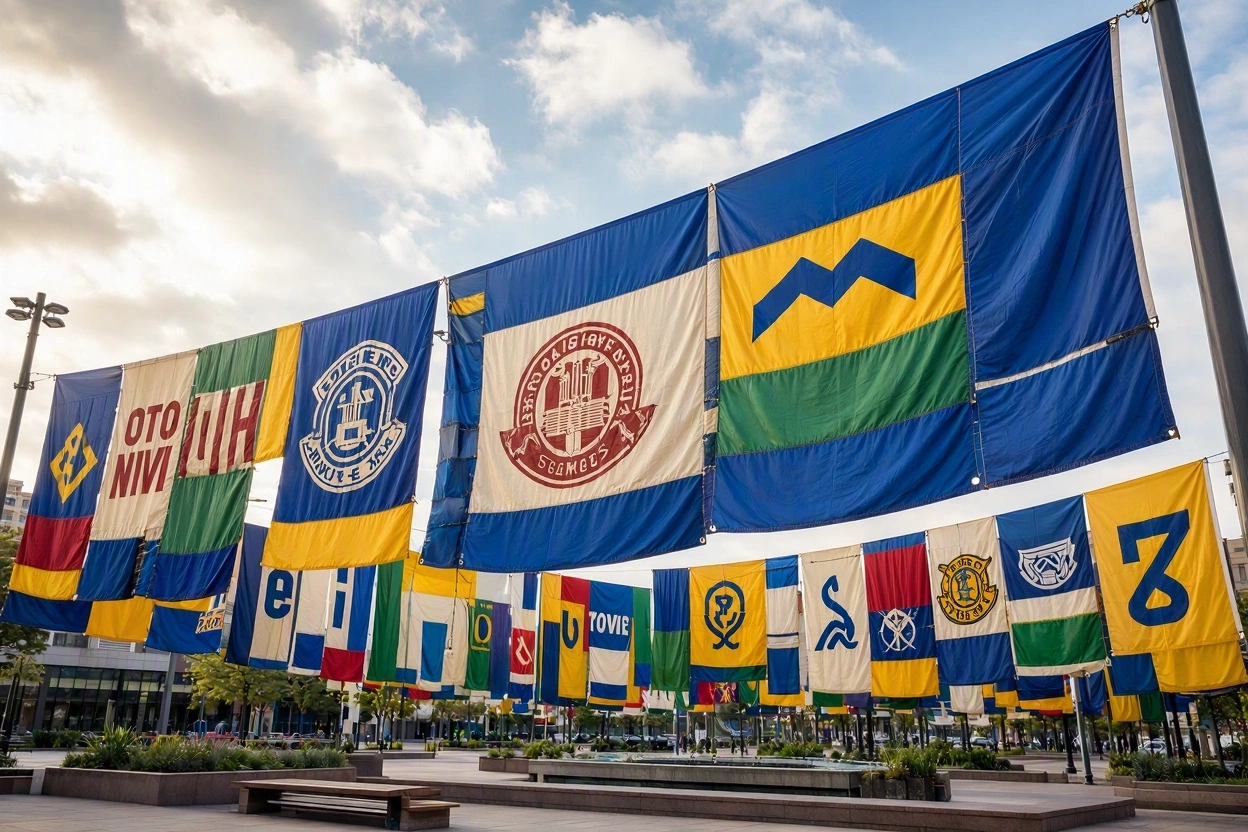
What happens to the flags and banners that decorate city streets after a festival, public event, or campaign ends? In many cases, these materials are taken down and discarded. But with a little creativity, they can become something people want to look at rather than throw away.
The idea of turning old lamp-post flags into a “Unity” artwork offers an interesting example of creative reuse. Materials that once served a temporary purpose can be brought together to create a new piece of art with a different message.
This approach connects art with sustainability. It encourages people to think about the useful materials around them and consider whether they still have something to offer.
Instead of seeing an old banner as waste, an artist can look at its colours, patterns, textures, and history as parts of a new creative project.
How Old Street Flags Become New Artwork
Flags attached to lamp posts are common in towns and cities. They are often used to promote festivals, sporting events, public celebrations, cultural activities, and community campaigns.
These displays can make streets feel lively and help people recognise a special occasion. However, their purpose is usually temporary. Once an event finishes or a campaign changes, the banners may no longer be needed.
That does not mean the material has to be thrown away.
Depending on its condition, an old flag can be cut into smaller sections, combined with other fabrics, or arranged to form a completely different design. Colours and printed details from the original banners can become part of the artwork.
Some pieces may have faded in the sunlight, while others may show folds, stitching, or signs of use. Rather than hiding these details, an artist can make them part of the finished design.
The result can be something that looks very different from the original street display.
There is also a story behind the materials. Each banner once belonged to a particular place, event, or public message. Bringing different pieces together gives them another purpose and allows their earlier history to remain part of the work.
This makes creative reuse more than a simple change in appearance. It becomes a way of looking at familiar objects from a fresh perspective.
What Does “Unity” Mean in Recycled Art?
The word “Unity” suggests people, ideas, or separate elements coming together. When used as the theme for an artwork made from discarded flags, it can carry a message of connection and shared purpose.
The concept is easy to understand. Materials that once appeared separately along streets can be combined into a single composition.
Different colours and patterns may sit alongside one another, creating a design that would be difficult to achieve with one piece of fabric alone. The differences between the original banners can become part of the artwork’s character.
This approach can also encourage viewers to think about the relationship between individual parts and the larger picture.
In a community setting, the idea of unity may suggest cooperation, belonging, and respect for different backgrounds. The artwork does not need to tell viewers exactly what to think. Its materials and design can leave room for personal interpretation.
The history of the flags adds another layer of interest. Before becoming art, they were part of the public environment, seen by people going to work, shopping, attending events, or walking through their neighbourhoods.
Their new form changes how people encounter them. Something that may once have gone unnoticed becomes the centre of attention.
That shift is part of the appeal of upcycled art. It asks people to look again at things they might normally overlook.
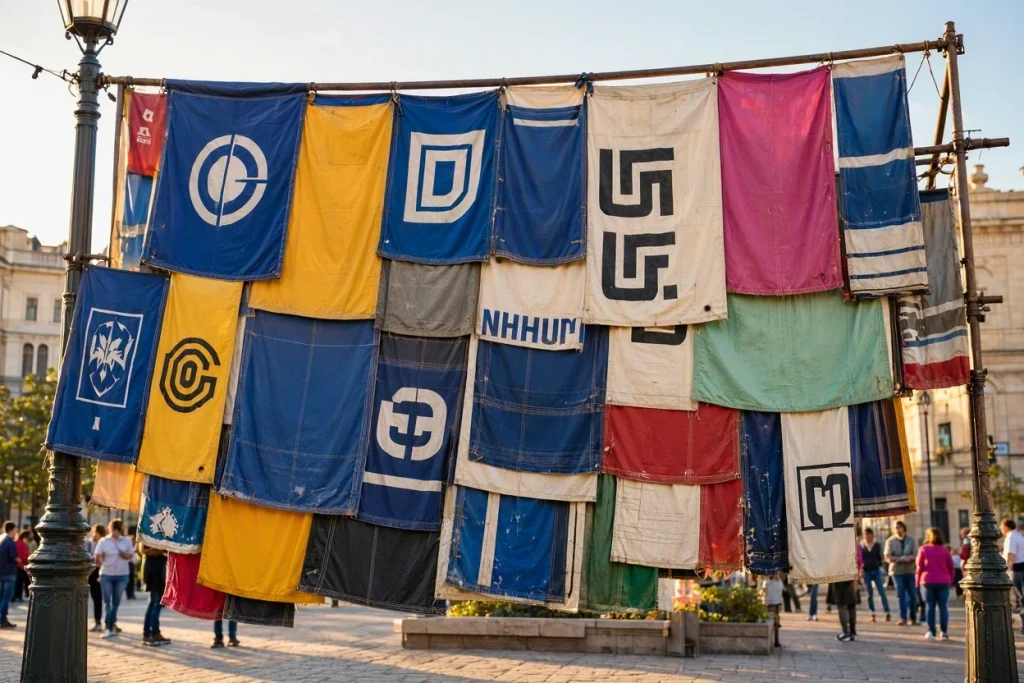
Why Upcycling Matters in Art and Design
Upcycling involves finding a new use for an existing object or material, often turning it into something with a different purpose or greater creative value.
It is not the same as simply throwing an item into a recycling bin. Instead, the material is reused in a way that makes use of what is already there.
Artists and designers have explored this idea with old clothes, wooden furniture, packaging, metal parts, discarded signs, and many other everyday objects. Street flags are another option because they can offer a mix of colours, printed graphics, and different fabric textures.
Reusing existing materials may reduce the need to buy new supplies. It can also help keep suitable items out of the waste stream, although the actual environmental benefit depends on the material, the process, and what would otherwise have happened to it.
There are practical matters to consider, too. Before an old banner is used in an artwork, it should be checked for dirt, damage, and durability. Some materials may need cleaning or repair, while others may not be suitable for a new use.
Artists also need to consider how the finished piece will be displayed. An outdoor installation, for example, may need stronger supports and materials that can handle changing weather conditions.
When these details are considered carefully, upcycling can become a useful part of the creative process rather than just a theme.
The most interesting results often come from working with the material instead of trying to make it look brand new. An old printed design or a faded patch may give the artwork a character that fresh fabric cannot easily copy.
From Temporary Street Displays to Lasting Creative Value
Public banners are designed to attract attention, but their time in the spotlight is often short. After a festival or campaign, they may be removed and stored, recycled, or discarded.
Turning suitable banners into artwork offers another possibility. Their role changes from promoting a particular event to becoming part of a new visual experience.
This can also create a connection between the artwork and the place where the original flags were displayed. People who recognise a colour, pattern, or printed detail may remember seeing it on their local streets.
That connection can make the finished piece feel more personal. It carries traces of everyday public life rather than beginning as a completely new object.
Creative reuse also opens up opportunities for schools, community groups, artists, and local organisations. With suitable materials and safe working methods, they can explore ways to turn unwanted objects into displays, installations, or decorative pieces.
Not every project needs to be large or complicated. Even small works made from leftover fabric can help people see the creative potential of materials they might otherwise ignore.
The “Unity” concept offers a simple message: an object’s first purpose does not have to be its last. With thoughtful planning, discarded flags can become part of a new artwork that encourages people to think about waste, design, and shared spaces.
The finished piece is valuable not only for its appearance but also for the process behind it. Viewers can appreciate the colours and arrangement while considering the material’s earlier life.
That combination of visual interest and reuse makes projects like this worth exploring.
Frequently Asked Questions
1. What is upcycled art?
Upcycled art is made by reusing existing objects or materials to create something new. Artists may use old clothing, fabric banners, furniture, packaging, or other items that would otherwise go unused.
2. Can old lamp-post flags be reused for artwork?
Yes, suitable lamp-post flags can be used in art projects if their condition, cleanliness, and material are appropriate. They may be cut, stitched, layered, or combined to create a new design.
3. How does upcycled art support sustainability?
Upcycled art can extend the useful life of existing materials and reduce the need for some new supplies. Its environmental impact depends on the materials used, how they are prepared, and whether the finished artwork remains useful over time.
