
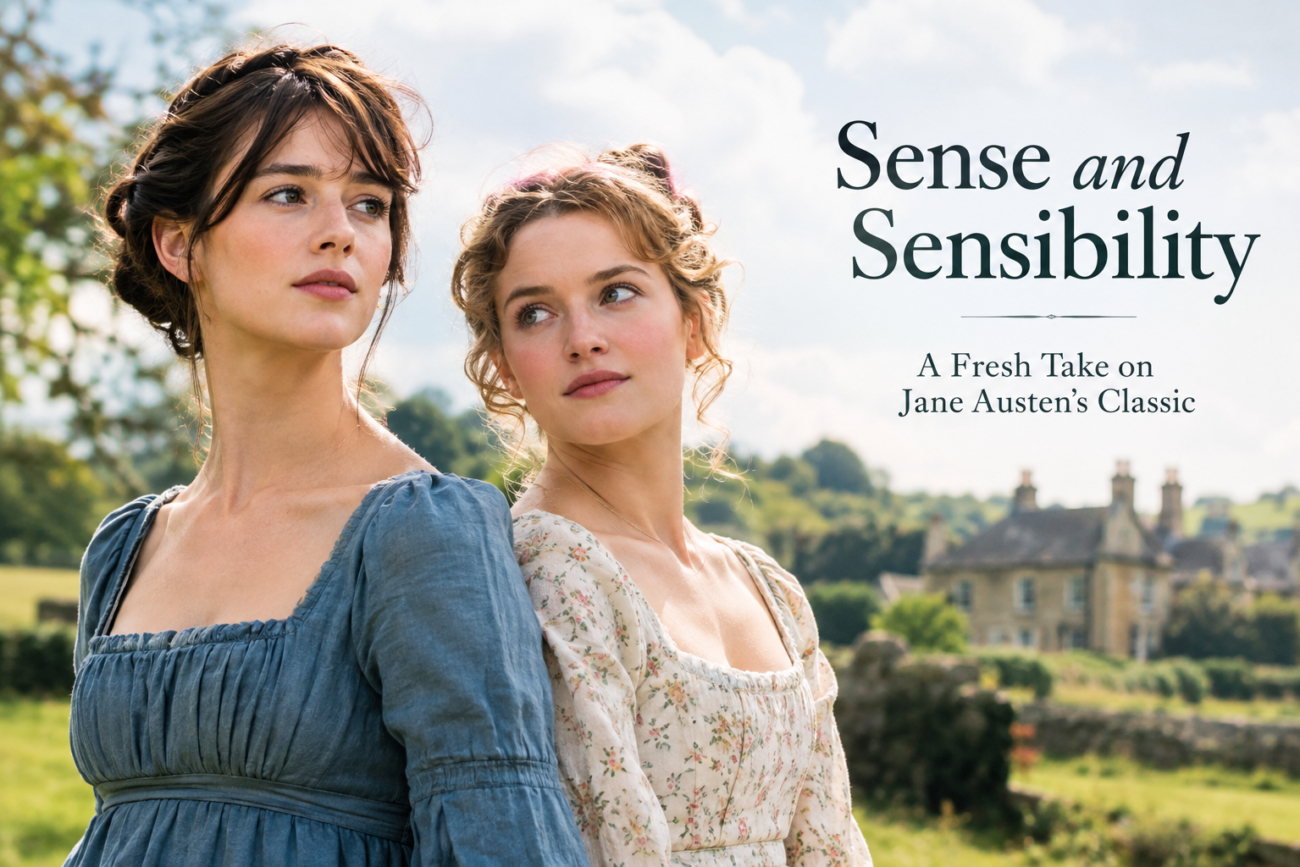
Jane Austen’s Sense and Sensibility has remained popular for more than 200 years, and its story continues to connect with readers and film audiences. Its mix of romance, family struggles, social pressure and difficult choices still feels familiar today. Now, filmmaker Georgia Oakley is bringing a new perspective to the much-loved novel.
The story has been adapted for the screen several times, with Ang Lee’s 1995 film standing out as one of its best-known versions. Oakley’s take follows a different path. Rather than focusing only on beautiful costumes and romantic moments, it puts greater attention on the everyday pressures facing women in Austen’s time.
Daisy Edgar-Jones plays Elinor Dashwood, while Esmé Creed-Miles takes on the role of her younger sister, Marianne. The supporting cast includes George MacKay, Frank Dillane, Herbert Nordrum, Caitríona Balfe and Fiona Shaw. Diana Reid wrote the screenplay, with Oakley directing.
The result offers another chance to explore the Dashwood sisters’ lives, their relationships and the choices they must make. For longtime Austen fans, the new version brings a different mood to a familiar story. For new viewers, it offers a way into a classic that still has plenty to say about love, money and independence.
A Familiar Story With a More Grounded Approach
The story begins after the death of Mr. Dashwood, leaving his wife and daughters facing an uncertain future. Because of the inheritance rules of the period, the family loses the home they once knew and must adjust to a less comfortable life.
This change affects nearly every part of their lives. Financial security is limited, social standing matters, and marriage can have a major effect on a woman’s future. The Dashwood sisters must think about their feelings while also dealing with the practical realities around them.
Elinor and Marianne handle these pressures in very different ways. Elinor is thoughtful and controlled, often keeping her feelings private to avoid causing pain or making a difficult situation worse. Marianne is more open about what she feels and dislikes the idea of hiding her emotions to satisfy society.
Yet the sisters are more than simple opposites. Elinor has strong feelings even when she does not show them, while Marianne’s honesty can sometimes leave her exposed to disappointment. Both have to learn how to deal with a world that does not always make room for personal happiness.
Oakley’s approach places these struggles at the center of the story. The romance remains important, but the sisters’ financial worries and family responsibilities give their decisions greater weight.
Daisy Edgar-Jones and Esmé Creed-Miles Lead the Story
Daisy Edgar-Jones brings Elinor’s quiet strength into focus. Elinor often feels she must remain composed, even when she is hurt or uncertain. Her ability to stay calm can make others underestimate the emotions she keeps to herself.
This role depends on small details as much as spoken lines. A pause, a glance or a change in expression can reveal what Elinor cannot comfortably say. Her feelings for Edward Ferrars, played by George MacKay, create a relationship filled with uncertainty and unspoken concerns.
Their connection is not simply a straightforward romance. Both characters must deal with expectations, personal doubts and circumstances that make it difficult to be completely honest. That tension gives their relationship room to develop naturally.
Esmé Creed-Miles brings a different energy to Marianne. She is passionate, expressive and unwilling to pretend that social rules always make sense. Her belief in sincere love shapes the choices she makes, even when those choices leave her open to heartbreak.
Frank Dillane plays John Willoughby, whose relationship with Marianne challenges her ideas about romance and trust. Herbert Nordrum plays Colonel Brandon, whose quieter affection offers a different picture of love. Through these relationships, Marianne has to consider whether strong feelings alone are enough to build a lasting connection.
The contrast between the sisters gives the film much of its emotional strength. Elinor and Marianne may approach life differently, but both are trying to understand themselves and find a place in a society that gives them limited freedom.
Georgia Oakley’s Visual Style and Austen’s Social Commentary
One of the features that sets this adaptation apart is its more natural look. Instead of presenting the past as a perfectly polished world, Oakley’s approach gives the setting a sense of everyday life. The countryside feels lived in, and the characters appear to belong to their surroundings rather than simply posing within them.
The film’s 35mm photography also contributes to its textured appearance. This style can make the period setting feel more physical and immediate, helping viewers connect with the Dashwoods’ changing circumstances.
That visual approach fits the story’s social themes. Losing a home is not just a dramatic event; it changes the family’s comfort, security and choices. Financial hardship affects how the sisters think about relationships and what they can expect from the future.
Austen’s novel has always explored the link between money and marriage. Women in the society she described had limited ways to support themselves independently, so a suitable marriage could offer stability as well as affection. Love and practical concerns were often tied together, whether the characters liked it or not.
Oakley’s version keeps these pressures visible. A romantic decision can affect a family’s future, while reputation and social position can shape how people treat one another. These details help explain why the Dashwood sisters cannot simply follow their hearts without considering the possible cost.
The film also has room for humor. Fiona Shaw’s Mrs. Jennings brings warmth and personality to the story through her interest in other people’s romantic lives. Her presence helps balance the more serious moments and reflects Austen’s talent for finding comedy in ordinary social behavior.
How This Adaptation Differs From Earlier Versions
For many viewers, Ang Lee’s 1995 Sense and Sensibility remains the familiar screen version. With Emma Thompson, Kate Winslet, Hugh Grant and Alan Rickman, that film became widely loved for its performances, romance and elegant period atmosphere.
Oakley’s interpretation offers a different experience rather than trying to copy that success. Its more grounded visual style and focus on the restrictions facing women give the story another tone. The characters’ lives feel less like a romantic dream and more like a constant effort to manage personal feelings alongside real responsibilities.
That difference is part of what keeps classic stories interesting. A new filmmaker can return to the same characters and discover details that earlier versions treated differently. One adaptation may focus on romantic warmth, while another draws attention to social pressure, family relationships or the limits placed on women.
The bond between Elinor and Marianne remains especially important. Their disagreements show how differently people can respond to the same difficult situation. Their care for one another also suggests that growing up does not mean abandoning emotion or reason. It means learning when to listen to each.
That idea remains easy to understand today. People still struggle to balance what they feel with what they know, and relationships still involve questions of trust, timing, responsibility and security.
Oakley’s Sense and Sensibility offers audiences a new way to consider these familiar themes. Its interest in the sisters’ inner lives and the social rules around them gives the story a fresh identity while keeping its emotional heart intact.
For Austen fans, it provides another interpretation to compare with earlier adaptations. For viewers discovering the story for the first time, it shows why these characters have remained part of popular culture for generations.
Frequently Asked Questions
1. Who stars in Georgia Oakley’s Sense and Sensibility?
Daisy Edgar-Jones plays Elinor Dashwood, and Esmé Creed-Miles plays Marianne Dashwood. The cast also includes George MacKay, Frank Dillane, Herbert Nordrum, Caitríona Balfe and Fiona Shaw.
2. How is the new adaptation different from the 1995 film?
The new version takes a more grounded approach to the period setting and gives attention to the financial and social pressures affecting the Dashwood family. Ang Lee’s 1995 film is known for its elegant period style and romantic atmosphere, while Oakley’s interpretation offers a different visual and emotional tone.
3. What are the main themes of Sense and Sensibility?
The story explores love, family loyalty, financial security, social expectations and emotional growth. Through Elinor and Marianne, it considers how people can balance their feelings with practical decisions and learn from experiences that challenge their beliefs.
